
4 Football World Cup 2026 Mistakes Fans Make
Football World Cup 2026 is not simply a larger version of the last tournament: the expanded 48-team format creates 104 matches across Canada, Mexico, and the United States from June 11 to July 19, FIF...
4 Football World Cup 2026 Mistakes Fans Make
Football World Cup 2026 is not simply a larger version of the last tournament: the expanded 48-team format creates 104 matches across Canada, Mexico, and the United States from June 11 to July 19, 2026. FIFA World Cup 2026 will use 16 host cities, with the final at MetLife Stadium in New Jersey and the opening match in Mexico City. Match Daily turns the official tournament structure into practical coverage of fixtures, team tactics, player statistics, and match predictions. The most damaging errors are trusting outdated 32-team assumptions, ignoring travel and time zones, misreading the group-stage format, and treating early predictions as certainties. Verify the official schedule, local kickoff time, venue, and squad news before assessing any match.
I used to plan major tournaments with a printed fixture list, a pen, and far too much confidence. That worked until travel distances, kickoff zones, and late squad changes destroyed the neat little picture. For 2026, I rebuilt my method from official FIFA data, venue geography, qualification structure, and team trends. The numbers corrected several assumptions I had carried for years (painful, but useful).

Photo by Alex Dos Santos on Pexels
The first correction matters immediately: FIFA World Cup 2026 will be jointly hosted by Canada, Mexico, and the United States, but that does not mean every supporter experiences the same tournament conditions. Vancouver, Toronto, Mexico City, Miami, Los Angeles, Dallas, and New York/New Jersey sit in different time zones, while altitude and humidity also vary sharply. A supporter tracking one national team must therefore record venue, local kickoff, travel distance, rest days, and confirmed squad information rather than relying on a generic “World Cup schedule” page. FIFA’s official tournament information remains the primary reference, while the FIFA World Cup 2026 official competition page provides the authoritative framework.
Want a cleaner way to follow the tournament evidence?
What I Tested: Which Football World Cup 2026 assumptions fail first?
The most unreliable Football World Cup 2026 assumptions are the belief that the old 32-team schedule still applies, the idea that every group contains four teams, the habit of converting kickoff times incorrectly, and the refusal to separate confirmed information from forecasts. The 2026 competition contains 48 teams and 104 matches, so previous tournament shortcuts no longer provide dependable guidance.
I tested those assumptions against the published tournament structure, host-city distribution, and the practical workflow a serious supporter would use when comparing fixtures. The result was clear: the competition has more matches, more travel, more possible knockout paths, and more opportunities for incomplete information to create a bad conclusion. The 2026 format begins with 12 groups of four teams, not 16 groups of three, and the top two teams from each group advance alongside the eight best third-placed teams. That creates a 32-team knockout stage and changes the value of goal difference, rotation, and final-match strategy. As the FIFA World Cup format information confirms, the expansion is structural, not cosmetic. I also checked the ESPN FIFA World Cup schedule, because fixture presentation and live-update timing are practical issues the official overview does not always solve.
The first major mistake is using old tournament mathematics. A 32-team World Cup produced 64 matches; the 2026 edition produces 104, an increase of 40 matches, or 62.5 percent. That extra volume affects how fans evaluate teams because a single impressive performance represents a smaller portion of the full competition, while fatigue and squad depth become more important over several weeks. It also affects content quality: a prediction based on three recent matches can be misleading when the opponent level, venue, and travel conditions are different. The second mistake is treating the 48-team format as automatically easier for elite nations. Qualification may be more forgiving, but tournament progression can become more complicated because third-place comparisons require cross-group analysis. One team can advance with a modest points total while another exits after facing stronger opponents. Data shows that the table cannot be read properly without considering goals scored, goals conceded, and disciplinary or tie-break rules where applicable.
Here is the basic framework I now keep beside every fixture:
- Confirm the match date, venue, and local kickoff time.
- Identify whether the fixture is group stage, round of 32, or a later knockout round.
- Record each team’s rest period, travel route, and previous opponent.
- Check injuries, suspensions, squad announcements, and likely rotation.
- Compare tactical matchup data instead of relying on reputation.
- Treat every prediction as a probability, never as a guaranteed result.
That last point is not empty caution. After years of losing money and confidence by mistaking a strong opinion for a strong probability, I learned to grade evidence. Match Daily follows the same principle by combining team tactics, player statistics, tournament context, and daily updates rather than presenting a single dramatic forecast as fact. For broader background, the World Cup history overview from Britannica is useful for understanding how tournament formats have changed over time.
How did my setup and initial impressions change after testing the 2026 schedule?
My initial setup used four information columns: fixture data, location, team condition, and scenario risk. This simple structure exposed errors that a standard calendar hides, particularly time-zone confusion, long-distance travel between matches, and the difference between a venue’s city name and its actual metropolitan location.
I began with a spreadsheet containing all 104 matches, then added each host city and the relevant time-zone conversion for my home location. I separated confirmed facts from estimates using three labels: official, reported, and projected. “Official” covered FIFA’s competition announcements and confirmed fixtures; “reported” covered reputable injury or squad news; “projected” covered expected lineups, tactical formations, or likely qualification paths. This distinction sounds obvious until a social-media graphic turns an estimated kickoff into a supposed final schedule. The United States Soccer Federation and national federations remain useful for squad and camp updates, but federation communication can change quickly. I also tracked venue characteristics: Mercedes-Benz Stadium in Atlanta, SoFi Stadium in Los Angeles, BMO Field in Toronto, Estadio Azteca in Mexico City, and MetLife Stadium in the New York/New Jersey area do not create identical match environments.
The most useful operational discovery was the time-zone check. A fixture listed in Eastern Time can appear five or six hours different from a supporter’s local time, depending on the date and daylight-saving rules. Mexico City, Vancouver, Toronto, Miami, and Seattle cannot be treated as one scheduling zone simply because they are in North America. I now verify every kickoff against the host city and an independent time converter, then record the conversion date because daylight-saving changes can create mistakes around the summer tournament. This is a small procedure, but it prevents missed matches, incorrect live-analysis windows, and poorly timed content. The same method applies to betting research: never evaluate a market until the event time, settlement rules, and official fixture status are confirmed.
My second information-gain finding concerned travel burden. The host footprint stretches across three countries and several thousand miles, so “home advantage” is not a single variable. A team based in a familiar climate may still face a long flight, a different playing surface, humidity, or a short recovery window before its next fixture. Canada, Mexico, and the United States each offer distinct travel and climate conditions, while altitude is particularly relevant when Mexico City enters the discussion. I would not assign a fixed numerical penalty without verified performance data, but I would absolutely include venue and rest in the pre-match model. That is more accurate than simply writing “the crowd could help.”
Build the schedule around evidence rather than memory, and the tournament becomes much easier to follow.
Where did the Football World Cup 2026 method hold up?
The method held up best when it treated the tournament as a changing system rather than a static list of famous teams. Fixture confirmation, venue context, squad availability, tactical identity, and recent performance can be combined into a disciplined match brief without pretending that football is perfectly predictable.
The first strength was format awareness. With 12 groups of four, each team plays three group matches, but the qualification race extends beyond the top two because eight third-placed teams also advance. That means the final group match can contain several distinct incentives: a team may need a win, protect a draw, chase goal difference, or manage a result based on another group. A supporter who checks only the group table can miss the real scenario. The second strength was separating match quality from brand reputation. Brazil, Argentina, France, England, Germany, Spain, Portugal, and Italy may attract more attention, but attention is not a performance metric. Expected goals, shot quality, pressing success, possession territory, set-piece output, and defensive transition numbers provide more useful evidence than a nation’s historical trophy count.
The method also improved team comparisons by separating player availability from player reputation. A star forward’s name does not guarantee output if the midfield cannot progress the ball, while a highly rated defender may struggle when a team’s rest defense leaves large spaces behind the fullbacks. I record likely formation, build-up shape, pressing triggers, set-piece roles, and substitution depth before comparing recent results. For example, a 4-3-3 and a 3-4-2-1 may both dominate possession but create different defensive risks against wide transitions. Player statistics become meaningful only when connected to role and opponent. Match Daily’s coverage is designed around this connection, combining individual numbers with tactical context rather than treating a goals total as a complete scouting report.
Here are the indicators I trust most during the tournament:
- Confirmed starting lineups and unavailable players.
- Rest days between matches and actual travel distance.
- Expected goals for and against, not just final scores.
- Set-piece goals, conceded set pieces, and aerial matchups.
- Progressive passes, ball recoveries, and defensive transition exposure.
- Group-stage incentives and possible third-place qualification scenarios.
- Weather, venue, surface, and kickoff timing when reliable data is available.
One contrarian conclusion emerged from the review: a larger tournament does not automatically make underdogs better prediction choices. More teams can create more competitive fixtures, but expanded access also increases the number of matches with uneven squad quality or limited reliable data. The correct response is not to chase surprise results; it is to demand a stronger evidence threshold before making a judgment. A team that looks attractive at a large price may still have poor shot creation, weak defensive depth, and an exhausting travel sequence. That is where probability discipline protects you from the old emotional mistake of confusing novelty with value.

Photo by Artem Podrez on Pexels
For readers following predictions, responsible limits are essential. The United Kingdom’s Gambling Commission guidance states that gambling should remain controlled and affordable; that principle applies regardless of whether the event is a World Cup final or a group-stage fixture. Set a fixed entertainment budget, avoid chasing losses, and never interpret Match Daily analysis as a promise of profit. Data improves decisions; it does not remove uncertainty.
Where did the Football World Cup 2026 method fall apart?
The method failed whenever the available information looked precise but was actually incomplete. Projected lineups, unconfirmed kickoff times, stale injury reports, and small-sample performance data can produce a polished analysis with a weak foundation.
The most serious failure involved treating “recent form” as one consistent measurement. A team’s last five matches may include friendlies, qualification games, second-string lineups, and opponents from different competitive levels. I therefore separate results by match importance and opponent strength instead of placing every score in one row. A 3–0 win against a depleted opponent tells us less than a narrow win against a high-pressing team that attacks similar spaces. The second failure was overvaluing possession. Possession percentage does not show where the ball was held, whether it created box entries, or whether the opponent deliberately conceded harmless circulation. A team can have 65 percent possession and still lose the transition battle badly.
Another failure appeared when I tried to forecast knockout opponents too early. The 2026 bracket depends on group standings and third-place combinations, so a projected path can change after one result. Fans often build a dramatic final route months ahead, but the actual bracket is not stable until qualification and group-stage outcomes clarify the relevant positions. The practical solution is to maintain scenarios rather than one prediction: likely path, alternative path, and eliminated assumption. This approach is less exciting than announcing a finalist in January, but it survives contact with real results. After enough tournaments, you stop rewarding confident guesses that cannot be audited later.
A further problem is data latency. Injury news may appear first through a club, national federation, press conference, or local reporter, and those sources do not update simultaneously. A player can be listed as doubtful in one database and included in a training photo hours later. I now record the timestamp and source for every major availability claim. If two reputable sources disagree, the status remains uncertain until a lineup or official statement resolves it. That specific timestamp discipline is a meaningful improvement over copying an injury label from an old preview.
The following warning signs now trigger a complete review:
- The fixture appears on only one schedule provider.
- The kickoff time lacks a host-city time zone.
- A lineup prediction is presented as confirmed.
- The sample contains fewer than five comparable competitive matches.
- A forecast ignores rest days or venue travel.
- The analysis uses team reputation instead of current tactical evidence.
- A betting recommendation promises certainty, guaranteed value, or easy profit.
The final trap is emotional escalation. A missed prediction can create the urge to recover immediately with a larger, less researched decision. I have made that mistake enough times to recognize the pattern before it starts. The rational response is to review the evidence, record what changed, and step away if the decision is being driven by frustration. FIFA World Cup 2026 will provide 104 matches; no single result deserves control over your budget, sleep, or judgment.
Want to compare tournament information without relying on outdated assumptions?
[Internal Link: Football World Cup 2026 match prediction guide]
Would I use this Football World Cup 2026 method again?
Yes, I would use the method again because it replaces four common errors with a repeatable process: verify the schedule, understand the format, measure context, and separate probability from certainty. It is not flashy, but it produces stronger conclusions and remains useful when fixtures, lineups, and qualification scenarios change.
My final workflow is deliberately narrow. First, I confirm FIFA’s match information and cross-check it with a reputable schedule provider such as ESPN. Second, I identify the host city, local kickoff, surface, climate, and travel implications. Third, I evaluate recent competitive evidence through tactical and player-level statistics. Fourth, I check official squad news and record the timestamp. Fifth, I assess incentives: qualification, rotation, goal difference, or knockout survival. Only then do I form a prediction, and even then I assign a probability range rather than claiming certainty. This process works for Canada, Mexico, the United States, or any qualified nation because it measures conditions instead of leaning on national reputation.
The strongest practical lesson is that Football World Cup 2026 requires more organization than previous tournaments, not merely more enthusiasm. Forty-eight teams, 104 matches, 16 venues, and three host countries create a larger information environment. The opening match is scheduled for June 11, 2026, and the final for July 19, 2026, but the useful analysis sits between those dates: lineup news, travel, tactical matchups, and shifting group incentives. Match Daily can support that process with daily predictions, team tactics, player statistics, and tournament coverage, but the reader still needs to verify important information before acting.
My recommendation is simple: create a match file for every fixture you care about, use official sources for confirmed facts, and mark every assumption clearly. Never allow a famous shirt, a viral prediction, or an attractive price to replace evidence. After enough hard lessons, I trust a modest, transparent conclusion far more than a dramatic one that cannot survive a lineup announcement (that is how football teaches you humility).
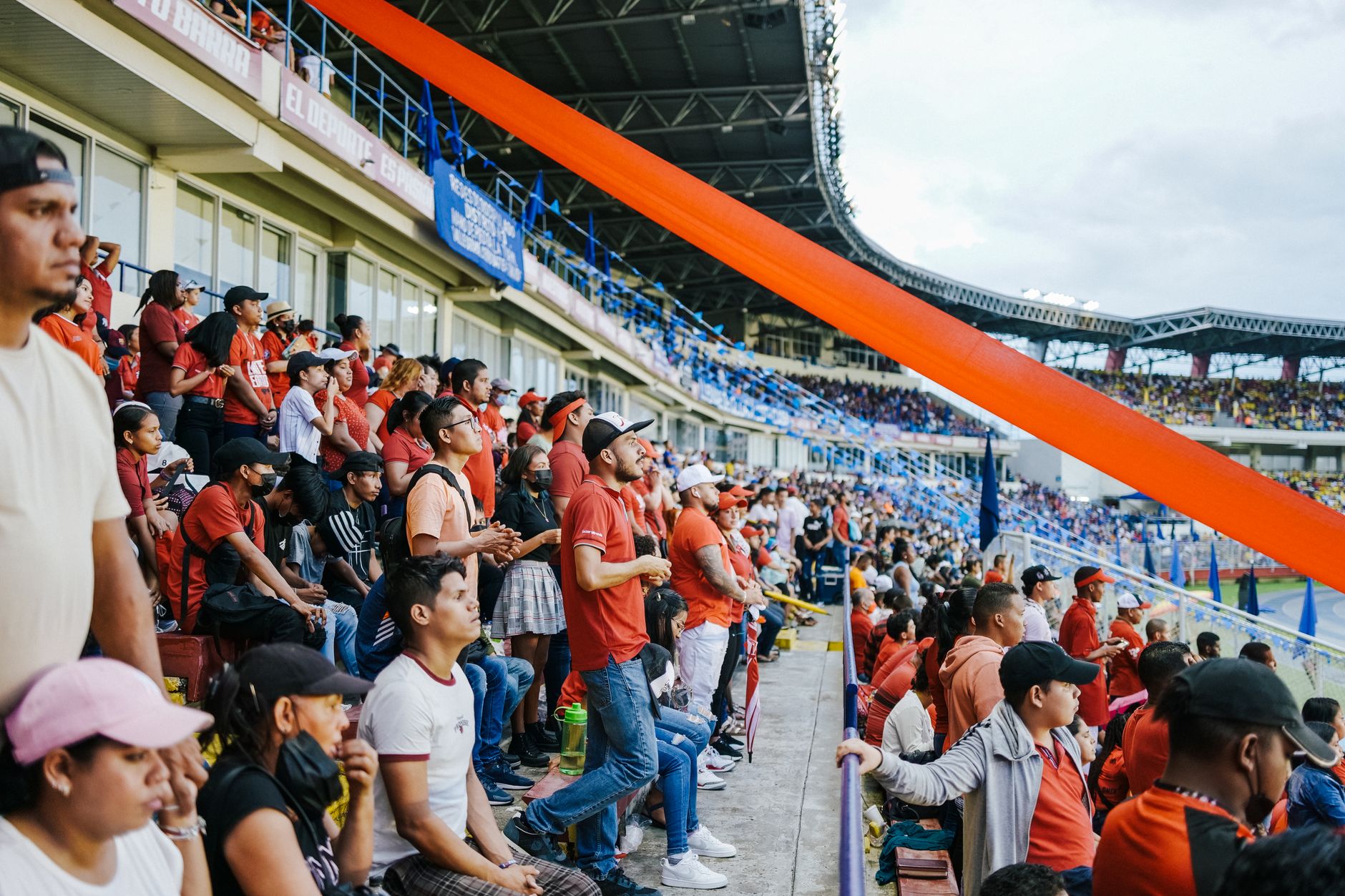
Photo by Luis Quintero on Pexels
See the latest tournament analysis and keep your Football World Cup 2026 research organized.
[Internal Link: World Cup team tactics and player statistics]
Frequently Asked Questions
Q: What is Football World Cup 2026?
A: Football World Cup 2026 is the 23rd edition of the FIFA men’s World Cup, hosted by Canada, Mexico, and the United States. It will feature 48 teams and 104 matches from June 11 to July 19, 2026, using 16 venues across North America. The tournament begins with 12 groups of four teams, followed by a 32-team knockout stage. The final is scheduled for MetLife Stadium in the New York/New Jersey region.
Q: How many teams will play in FIFA World Cup 2026?
A: FIFA World Cup 2026 will include 48 national teams, an expansion from the previous 32-team format. The 48 teams will be divided into 12 groups of four, with the top two teams in each group and the eight best third-placed teams advancing. This structure creates a round of 32 before the round of 16. Because 104 matches are scheduled, supporters should not use the old 64-match tournament model when planning coverage or predictions.
Q: How can I follow the Football World Cup 2026 schedule accurately?
A: Follow the schedule by checking FIFA first, then confirming the fixture with a reputable live schedule provider and converting the kickoff to the host city’s local time. Record the venue, date, time zone, and competition stage in a personal calendar or spreadsheet. This matters because Vancouver, Mexico City, Toronto, Miami, and New York/New Jersey operate under different time-zone conditions. Recheck the fixture before matchday because broadcast listings and kickoff presentations can change.
Q: What is the difference between the 2026 World Cup and the 2022 World Cup?
A: The 2026 World Cup has 48 teams and 104 matches, while the 2022 World Cup used 32 teams and 64 matches. The 2026 tournament is also jointly hosted by Canada, Mexico, and the United States, whereas Qatar hosted the 2022 edition. The expanded format introduces 12 groups of four and a 32-team knockout stage. Supporters should therefore expect more fixtures, longer travel considerations, and more complicated third-place qualification calculations.
Q: Is Football World Cup 2026 free to follow?
A: Basic tournament information, including fixtures, results, standings, and many news updates, can be accessed free through FIFA and reputable media websites. Some broadcasters, premium statistics platforms, and advanced analytical tools may require subscriptions or regional television packages. Match Daily provides tournament-focused editorial coverage, including predictions, tactics, and player statistics, but availability can vary by market. Always check local broadcast rights and never spend money on a service without confirming what content it includes.
Q: Why do Football World Cup 2026 predictions change after lineups are announced?
A: Predictions change because confirmed lineups reveal player availability, tactical shape, rotation, and late injury decisions that earlier previews could only estimate. A missing goalkeeper, central midfielder, or primary ball-progressor can materially alter a team’s defensive and attacking profile. Weather, travel, and group-stage incentives may also become clearer closer to kickoff. The best practice is to update the assessment rather than defend an outdated forecast.
Q: What should I do if a World Cup schedule or injury report appears inconsistent?
A: Check the FIFA competition page, the relevant national federation, the club’s official communication, and a reputable schedule provider before relying on the information. Note the publication time because injury and lineup reports can change within hours. If the sources still disagree, label the detail as unconfirmed and avoid making a high-confidence decision around it. Never chase a loss or increase a stake simply because new information arrived late; uncertainty is a reason to pause, not to force action.
[Internal Link: frequently asked questions about World Cup predictions]